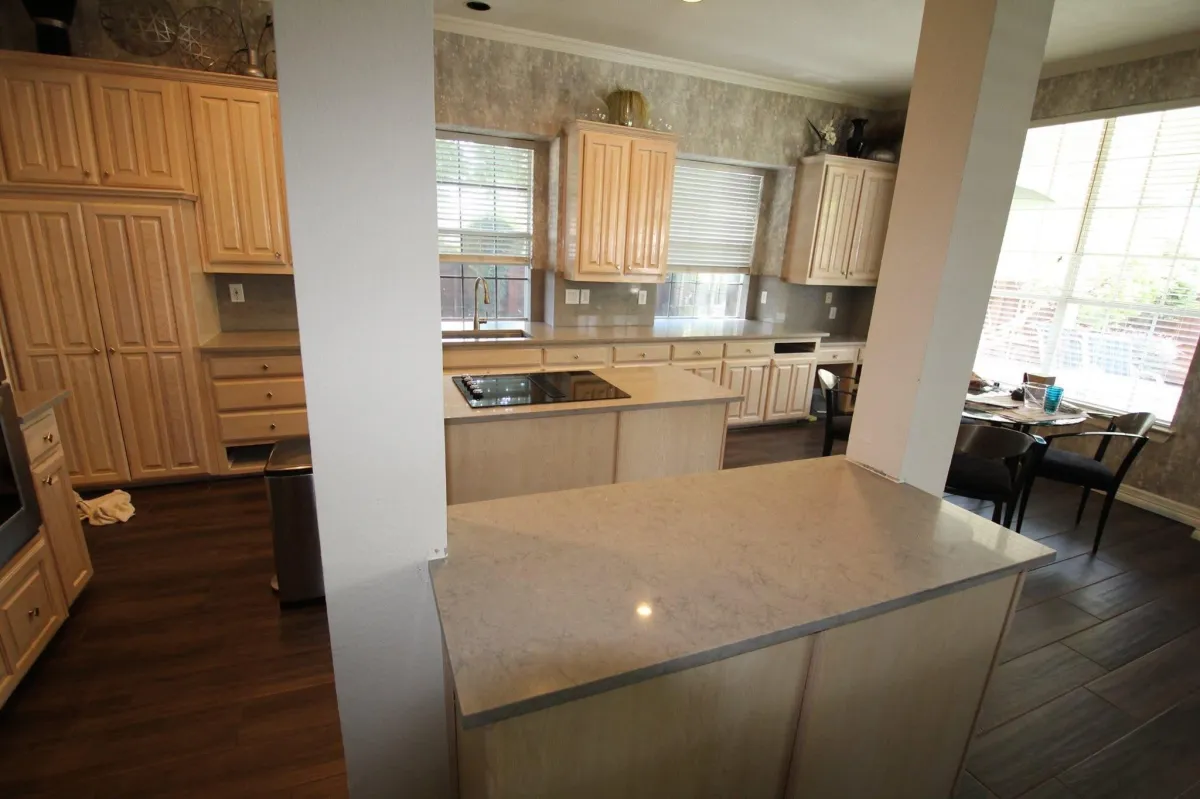
Granite Fabrication Timeline in Dallas: Start to Finish Guide | Dallas Granite Installers

Understanding the Granite Fabrication Timeline: How Long From Start to Finish?
If you are planning new granite countertops, the most common question is simple: How long does granite fabrication take from start to finish? In Dallas, the timeline is usually less about “how fast can someone cut stone” and more about how well the process is planned: scheduling, measurements, material selection, shop queue, edge work, sink cutouts, finishing, and installation coordination.
This guide breaks the full granite fabrication timeline into clear phases so you know what happens, when it happens, and what can speed things up or slow things down. You will also learn what to have ready before your templating appointment, how to avoid common delays, and how to set realistic expectations for your kitchen or bathroom project.
What “Granite Fabrication” Actually Includes
Granite fabrication is the complete process of turning a raw slab into finished countertop pieces that fit your home precisely. It typically includes:
•Confirming final layout, sink type, faucet location, and edge profile
•Field measurement and templating (the “blueprint” for your counters)
•Slab selection and layout planning (where the veining and movement will land)
•Cutting, shaping, edging, and polishing
•Cutouts for sinks, cooktops, and faucets
•Quality control, sealing (when appropriate), and safe transport preparation
•Installation, leveling, seams, final finishing, and cleanup
When you ask, “How long does fabrication take?” you are really asking, “How long does the full pipeline take?” That pipeline is what determines your real project timeline.
Typical Granite Fabrication Timeline in Dallas
For most standard residential projects, a realistic timeline is:
•Small or simple projects (single vanity, small kitchen): often 5 to 10 business days after templating
•Average kitchens (multiple runs, island, standard edges): often 7 to 15 business days after templating
•Complex projects (waterfalls, multiple seams, specialty edges, tight access): often 10 to 20 business days after templating
Those ranges assume material is already selected or readily available and that there are no midstream changes. Changes are the number one reason timelines stretch.
Phase 1: Planning and Final Decisions
Before any measuring happens, the project needs a few decisions locked in. If these are not finalized, templating may still happen, but fabrication often cannot fully proceed until details are confirmed.
Key decisions that impact timeline:
•Sink type: undermount, drop-in, farmhouse, trough
•Sink model and size: the physical sink is best on-site or the exact spec sheet must be provided
•Faucet and dispenser holes: how many and where
•Cooktop or range cutout requirements: especially for specialty appliances
•Edge profile: eased, bevel, bullnose, ogee, custom laminated edges
•Backsplash plan: full height, 4-inch splash, or no splash
If you want the fastest possible fabrication timeline, treat this phase like a checklist and confirm everything before templating. Fabrication moves smoothly when there is nothing left to guess.
Phase 2: Templating and Field Measurements
Templating is the moment the project becomes real. This step captures exact dimensions and site conditions so the stone can be cut to fit your cabinets, walls, and appliances. In many projects, templating is scheduled after cabinetry is installed and secured, because movement after templating creates risk.
What happens during templating:
•Precise measurement of countertop runs
•Verification that cabinets are level and properly supported
•Noting wall irregularities and out-of-square corners
•Confirming overhangs, support brackets, and seating clearances
•Confirming sink position, faucet position, and seam strategy
Typical duration: 1 to 2 hours for most kitchens, less for a vanity.
Timeline impact: templating is usually the “start clock” for fabrication. Once templating is complete and approvals are confirmed, the shop can schedule the job into production.
Phase 3: Slab Selection and Layout Approval
Granite is natural stone. No two slabs are identical, and the layout matters. For projects with strong movement or bold patterning, slab layout is not a minor detail. It influences seams, visual flow, and the final look of the space.
This phase can be fast or slow depending on how decisions are handled.
Fast scenario:
•You select a slab that is in stock and available immediately
•You approve the layout quickly
•Your sink, faucet, and edge choices are finalized
Slower scenario:
•The slab is on hold, in transit, or needs to be ordered
•You want to review multiple layout options
•You change edge style or sink model after templating
If your goal is speed, choose your material early and approve layout quickly. If your goal is perfection, it is worth taking time here, because layout is the stage that defines the final visual result.
Phase 4: Cutting and Shaping in the Shop
Once templates and layout are approved, fabrication enters production.
Typical shop steps:
•Digital mapping or template translation: converting field measurements into cut-ready plans
•Slab positioning: aligning pattern and determining seam locations
•Primary cuts: cutting the slab into the main sections
•Cutouts: sink, cooktop, and faucet holes
•Edge shaping: forming the selected edge profile
•Polishing: finishing edges and exposed surfaces to match the slab’s finish
This is the phase people imagine when they think “fabrication.” In reality, the timeline depends heavily on shop scheduling and how complex the project is.
Simple projects move through this phase quickly. Complex projects take longer because each detail requires additional setup, handling, and finishing.
Phase 5: Dry Fit, Quality Control, and Sealer Planning
Before your granite leaves the shop, it should be reviewed for:
•Accurate measurements and overhangs
•Clean edges and consistent polish
•Proper cutout sizing
•Reasonable seam placement and seam readiness
•No major fissures, cracks, or damage that affects performance
•Safe handling and transport preparation
Sealing is often discussed here. Not all granite requires the same sealing approach. Some slabs are more porous than others. A professional workflow includes evaluating the stone’s characteristics and recommending a sealing plan that matches your usage and maintenance preferences.
This phase is also where responsible teams reduce surprises. Quality control prevents last-minute problems at installation, which is one of the biggest causes of jobsite delays.
Phase 6: Scheduling Installation and Preparing the Site
Installation cannot be smooth if the site is not ready. Many timeline problems blamed on fabrication are actually site readiness issues.
A ready site usually means:
•Cabinets installed, secured, and level
•Plumbing and electrical rough-ins complete
•Sink on-site (or exact spec confirmed)
•Appliances present when needed for fit confirmation
•Walkways cleared for safe transport
•Floors protected if required
•Decision on backsplash timing (before or after) clarified
If any of these are missing, install day can become a reschedule. Reschedules stretch your timeline more than almost anything else because they push you back into the calendar queue.
Phase 7: Installation Day and Final Finishing
Installation is where craftsmanship becomes visible. A clean install includes leveling, fitting, seam work, and final finishing.
Typical installation sequence:
•Dry placement and alignment
•Leveling and shimming as needed
•Seam joining and seam finishing
•Sink mount coordination (when applicable)
•Final adjustments for reveals and fit
•Cleanup and handoff guidance
Timeline: most kitchens install in one day, sometimes two for complex layouts, multiple levels, or special features like waterfalls.
After installation, you may have a brief “settling period” depending on adhesives, sink mounting method, and final sealing plan. The installer should provide clear do’s and don’ts for the first 24 to 48 hours.
What Can Slow the Granite Fabrication Timeline
If you want a predictable timeline, avoid these common delays:
1.Changing sink model after templating
2.Waiting to choose slab until after templating
3.Cabinets not level or not secured
4.Appliances not on-site when needed
5.Complex edge profiles added late
6.Unclear backsplash plan or tile timing conflicts
7.Access issues on install day
A single change can create a domino effect, especially when it forces re-approval, re-layout, or re-cut decisions.
What Can Speed Up the Timeline Without Sacrificing Quality
You can move faster while still doing it right by:
•Choosing your slab early
•Having the sink and faucet decisions finalized before templating
•Confirming edge profile before templating
•Ensuring cabinets are installed, level, and stable
•Approving layout quickly once presented
•Keeping communication tight and decisions documented
Speed comes from clarity. Clarity comes from decisions made early.
How Long Should You Expect From “Yes” to Finished Countertops?
If you are trying to plan a remodel timeline, this is a practical way to think about it:
•Day 0: cabinets installed and ready
•Days 1 to 3: templating scheduled and completed
•Days 4 to 14: fabrication in the shop (varies by complexity and queue)
•Days 10 to 20: installation scheduled and completed
In many cases, you are looking at roughly 2 to 3 weeks from cabinets-ready to installed granite. Some jobs can be faster. Some high-detail jobs take longer. The key is to plan for a professional timeline that protects the finish, fit, and long-term performance.
Conclusion
Granite fabrication is not a single step. It is a controlled sequence: planning, templating, slab layout, shop production, quality control, scheduling, and installation. When each phase is handled with discipline, your project stays predictable, your seams look cleaner, your cutouts fit correctly, and your finished surfaces feel intentional.
If you want the fastest timeline, the biggest lever is not rushing the shop. The biggest lever is making decisions early and keeping the project stable once templating is complete. That is how you get speed without sacrificing craftsmanship. When the process is clear, the final result feels effortless, and your new granite looks like it was always meant to be there.
Contact us today to receive a free estimate or set up an in-home inspection!